 Wholesale Handler
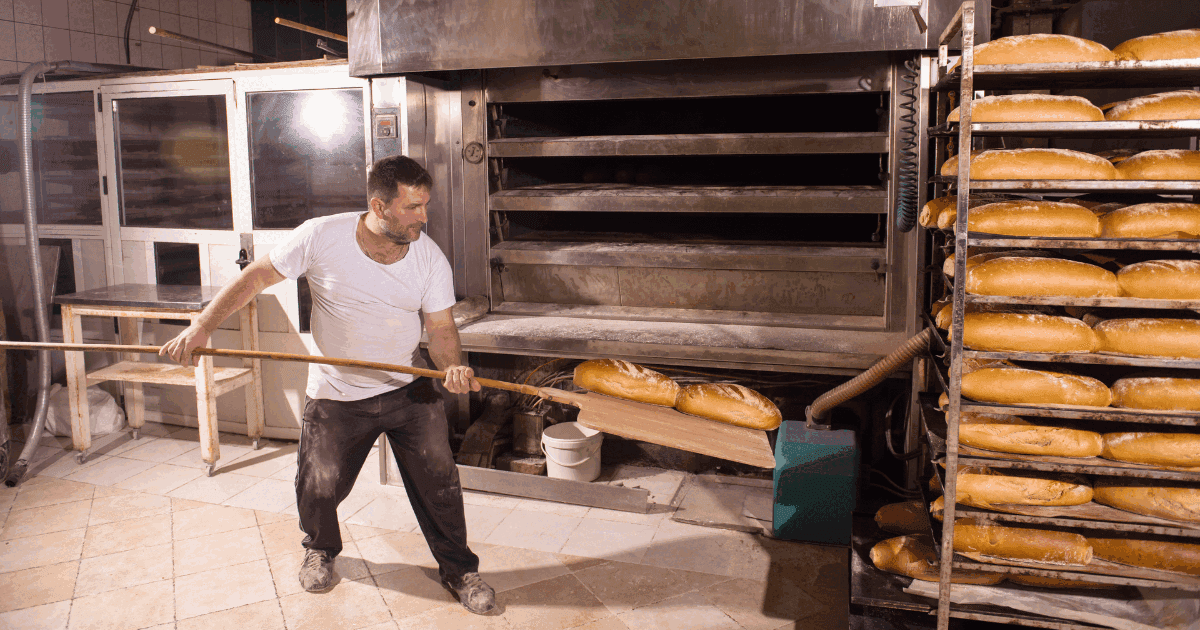
It's 3am. A baker stands in the kitchen with a notepad, adding up how many sourdoughs are needed across all of today's orders. Eight for the café on the high street. Twelve for the restaurant. Six for the deli. Four for the new coffee shop - wait, did they change their standing order this week?
Phone out. Scroll back through messages. Find the order. It was five, not four. Correct the number, keep going.
This takes twenty minutes every morning. Longer on busy days. And the whole time, it's one missed message away from under-baking or over-baking.
The manual process everyone uses
Almost every wholesale bakery does this the same way:
- Check which orders are in for today
- Go through each order and note the quantities per product
- Add up the totals - 31 sourdoughs, 45 croissants, 20 rye loaves
- Double-check against standing orders to make sure nothing's missing
- Start baking
Steps 1 through 4 are pure admin. They don't require skill or judgment. They just require not making an arithmetic error at 3am while still waking up.
Where it goes wrong
Missed orders
An order came in late, or through a different channel, or you forgot to check one customer's standing order. You bake based on incomplete numbers. Either you're short at delivery time, or a customer doesn't get what they ordered.
Mental arithmetic at the worst possible time
Adding up quantities across ten or fifteen orders isn't hard. Doing it accurately at 3am before coffee, while also thinking about oven timing and dough prep, is where mistakes happen. It's not a maths problem. It's a human problem - and it's early.
Standing order confusion
Most wholesale customers have a regular weekly order. But "regular" doesn't mean "never changes." A customer adjusts their Friday order for a bank holiday. Another one pauses for a week. If your production numbers are based on a standing order that's quietly changed, you're baking the wrong amount.
This is why a standing-order system needs primitives for the messy bits. Wholesale Handler lets customers (or you on their behalf) pause until a specific resume date, skip a single occurrence, or update the schedule itself for every delivery from then on. The production list reflects whatever the customer actually wants this week, not what they set up six months ago.
No way to check your own work
With a manual tally, there's no audit trail. If you baked 30 sourdoughs but should have baked 35, you can't easily go back and see where the five went missing. You just know you're short, and a customer is disappointed.
What a production list should actually be
A production list is just the answer to one question: across all confirmed orders for a given delivery date, how many of each product do I need to make?
That's it. It's a sum. The only reason it's difficult is because the orders are scattered across messages, notebooks, and spreadsheets, so you have to gather them before you can add them up.
It's not the same document as a packing slip. The production list is one total per product for the whole bake; the packing slip splits that bake back out per customer. You need both, in that order.
If all your orders were already in one place and already confirmed, generating the production list would take zero effort. The system would just add up the quantities and show you the totals.
From orders to oven in seconds
The fix isn't a production planning tool or a batch optimisation system. It's just having your orders in one place so the totals calculate themselves.
You open the system, look at tomorrow's confirmed orders, and the production numbers are already there. Thirty-one sourdoughs. Forty-five croissants. Twenty rye loaves. No adding up, no cross-referencing, no scrolling through messages.
You print it or glance at it on your phone, and you start baking.
How Wholesale Handler solves this
Wholesale Handler collects all your orders in one place. Customers order through their portal, orders are confirmed by cutoff, and you get a production list that totals every product across all orders for each delivery date.
No manual tallying. No wondering if you've missed one. Just a list of what to bake, generated from the orders your customers already placed.